From Fragmented to Fluid: Overtur™
01/Summary
Project Type
Cloud-based Web App
Date
June 2017 - November 2023
Team
Product Designer
Product Owner(s)
Front-End Developer
Back-End Developer
Product Owner(s)
Front-End Developer
Back-End Developer
First Year Metrics
+200 authentic users
$1 million in revenue
Project Vision
Overtur, a cloud-based platform designed and developed by Allegion, was created specifically to solve the fragmented workflow that traditionally existed in the door and hardware specification and coordination process.
Customer Problem
Allegion recognized that specifying door hardware (locks, closers, exit devices, etc.) was a complex process involving many stakeholders — architects, hardware specifiers, contractors, etc. - thus containing many workflows.
The goal of Overtur was to create a centralized environment for various roles in the building industry to complete their building and construction workflows in a collaborative digital environment.
The challenge was that before a centralized digital platform existed, the process of designing, specifying, reviewing, managing, and ordering door hardware was highly manual and disjointed.
Project Challenges
This was a huge milestone for me as both a founding and solo product designer. We were a small, scrappy team with a massive goal: launch a live prototype in six months and the full app within a year. Since there were no established design processes yet, I had to build them from scratch. Those same workflows actually laid the foundation for what eventually became the 20+ person UX/UI team at Allegion.
One of the wildest hurdles was the sheer speed of our growth. In just two years, the team exploded to include six engineers, two QA analysts and eight different product owners. Managing that many stakeholders, each with their own requirements and visions, was a constant balancing act. Despite the "too many cooks" challenge, I stayed focused on pushing user needs above everything else to ensure we delivered a cohesive experience.
One of the wildest hurdles was the sheer speed of our growth. In just two years, the team exploded to include six engineers, two QA analysts and eight different product owners. Managing that many stakeholders, each with their own requirements and visions, was a constant balancing act. Despite the "too many cooks" challenge, I stayed focused on pushing user needs above everything else to ensure we delivered a cohesive experience.
02/What I Delivered and How
-- Services
- Design Strategy Coaching
- Competitive analysis
- Wireframing and Prototyping
- Designer/Developer collaboration
- Facilition
- User Research
-- Deliverables
- User flows and task flows
- Wireframes (low- and mid-fidelity)
- Interactive prototypes
- UI Component library
- High-fidelity UI designs
-- Outcomes
I delivered a live prototype within the first six months that totally shifted our direction based on the user feedback we surfaced.
From there, I delivered finalized designs that provided the momentum helped us ship the full product in under a year.
From there, I delivered finalized designs that provided the momentum helped us ship the full product in under a year.
03/Understand the Problem
What the team discovered
Through interviews, workflow shadowing, and multiple multi-day usability workshop called Ascent Conferences, the team uncovered consistent pain points
- Hardware schedules and specifications were maintained manually and frequently fell out of sync across teams.
- Version control was a major source of rework and risk.
- Communication between field and office was slow and fragmented.
- There was no reliable digital workflow connecting decisions, specs, and inspections in the field.
Insights become problem statements
From research, I synthesized a focused set of design challenges with just a few problem statements as examples
- "How might we centralize hardware data so every stakeholder works from a single source of truth?"
- "How might we improve visibility into decisions and changes across the team?"
Six Core Processes Needed
Mapping Data
Viewing Floor Plans
Data Reporting
Tracking Changes
Managing Specifications
Importing and Exporting Data
04/Working Artifacts

Feedback capture grid from an Ascent Conference.
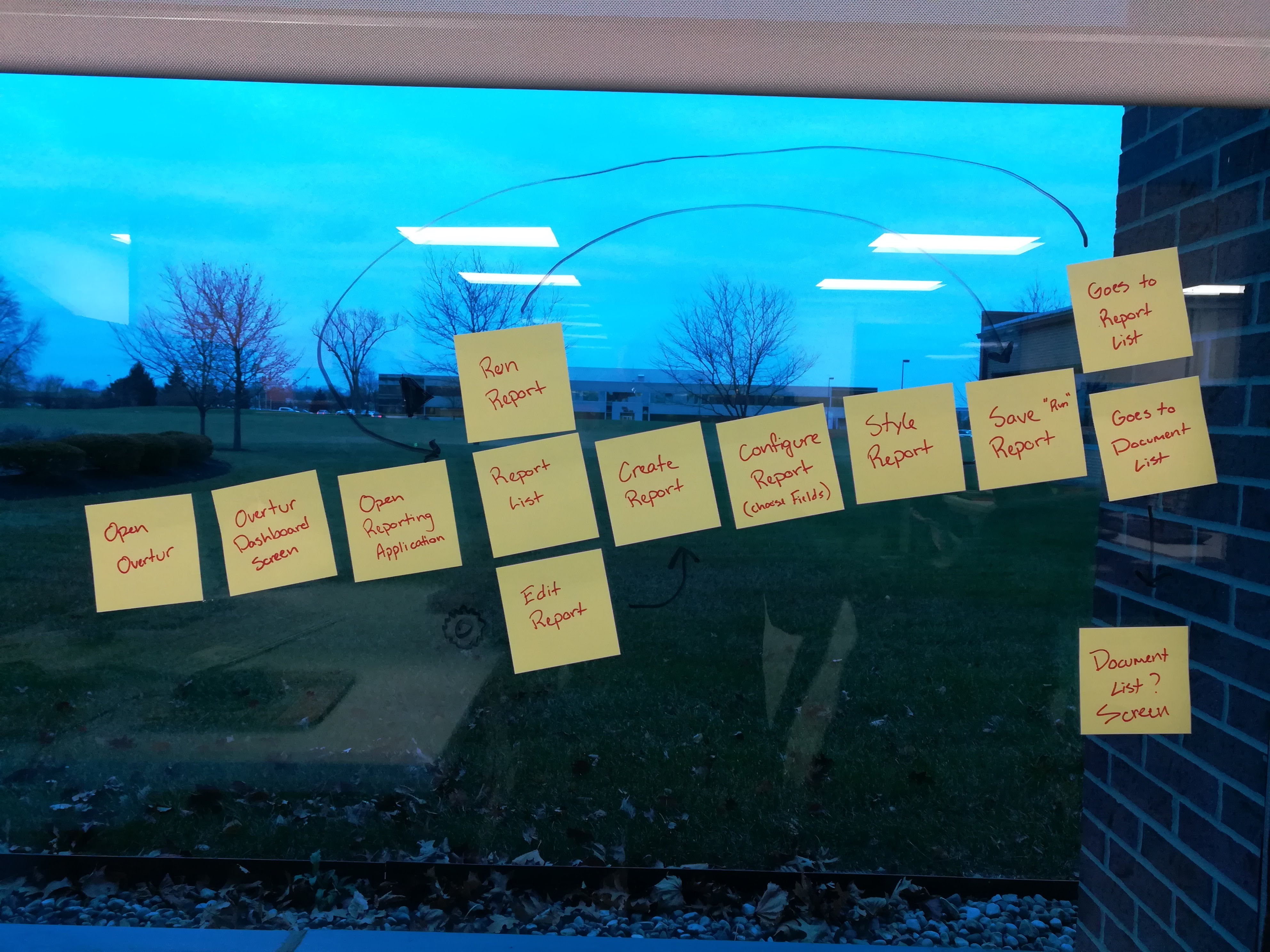
User flow of the reporting function.
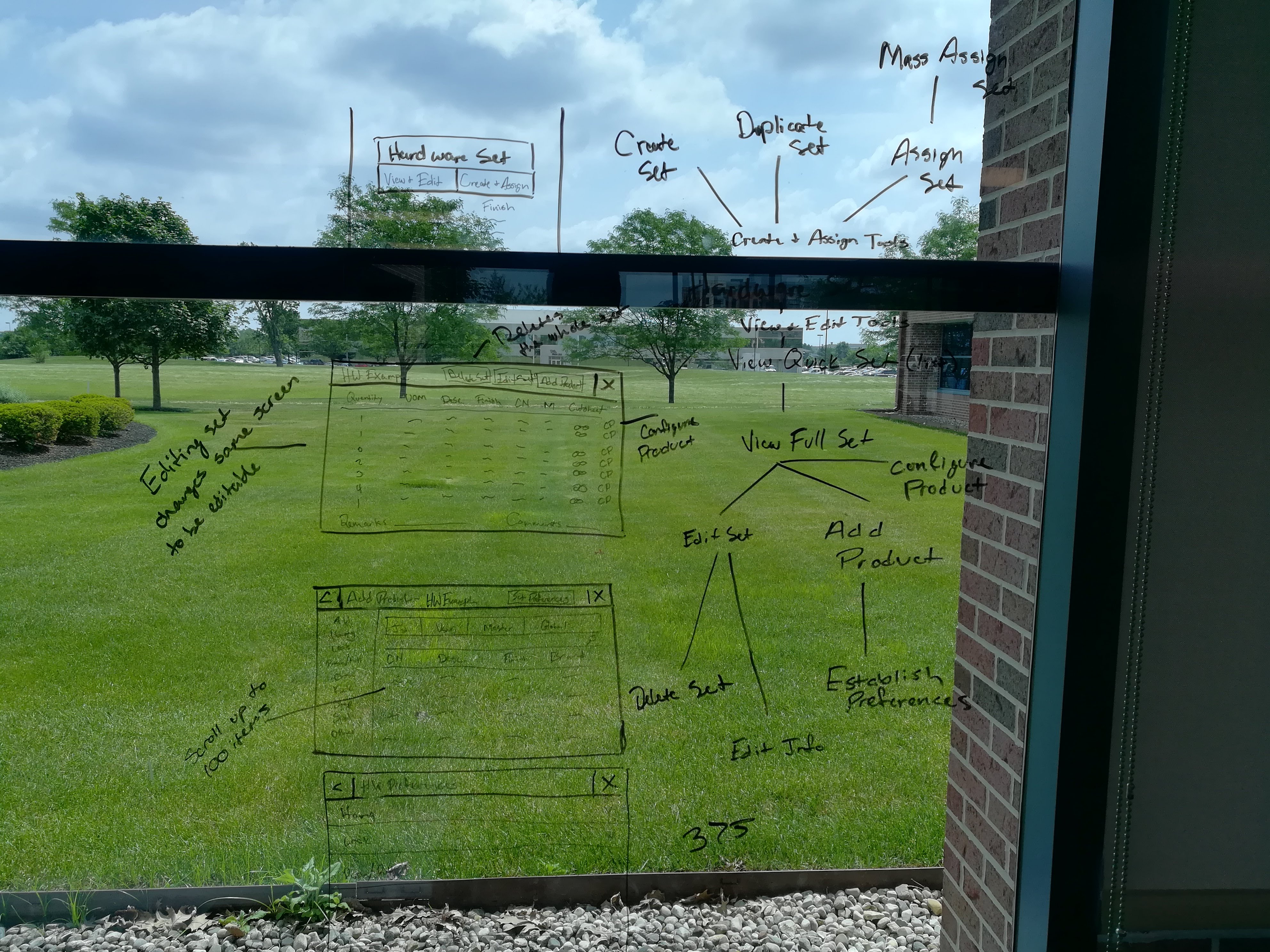
Task flow of adding hardware sets to building plans.
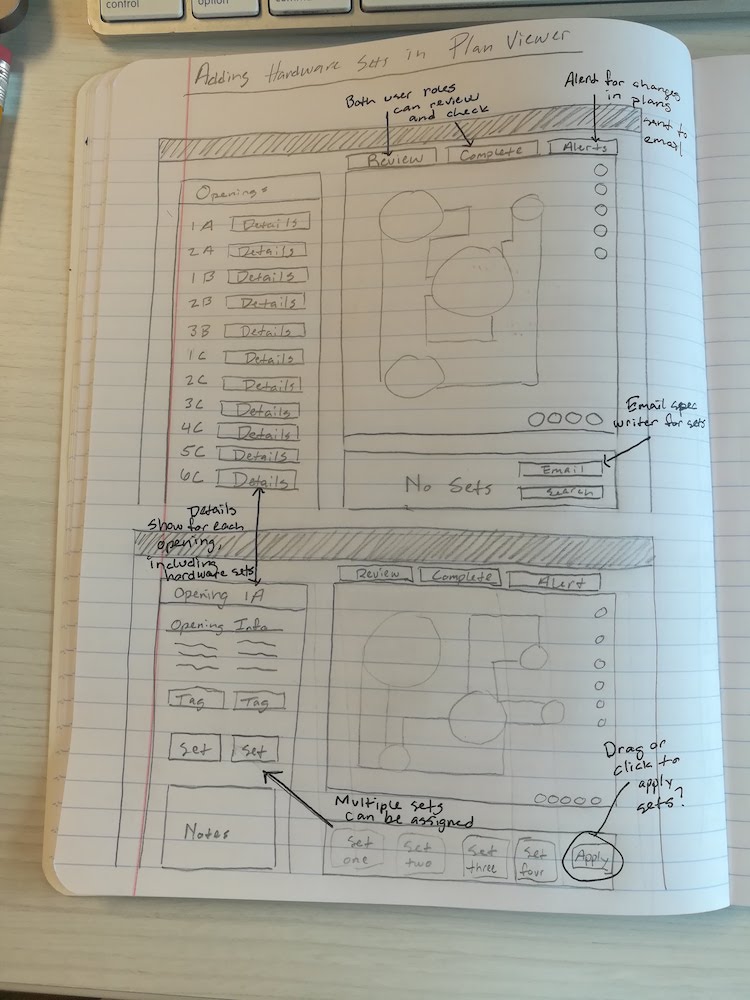
Lo-fidelity mockup of building and managing hardware sets.
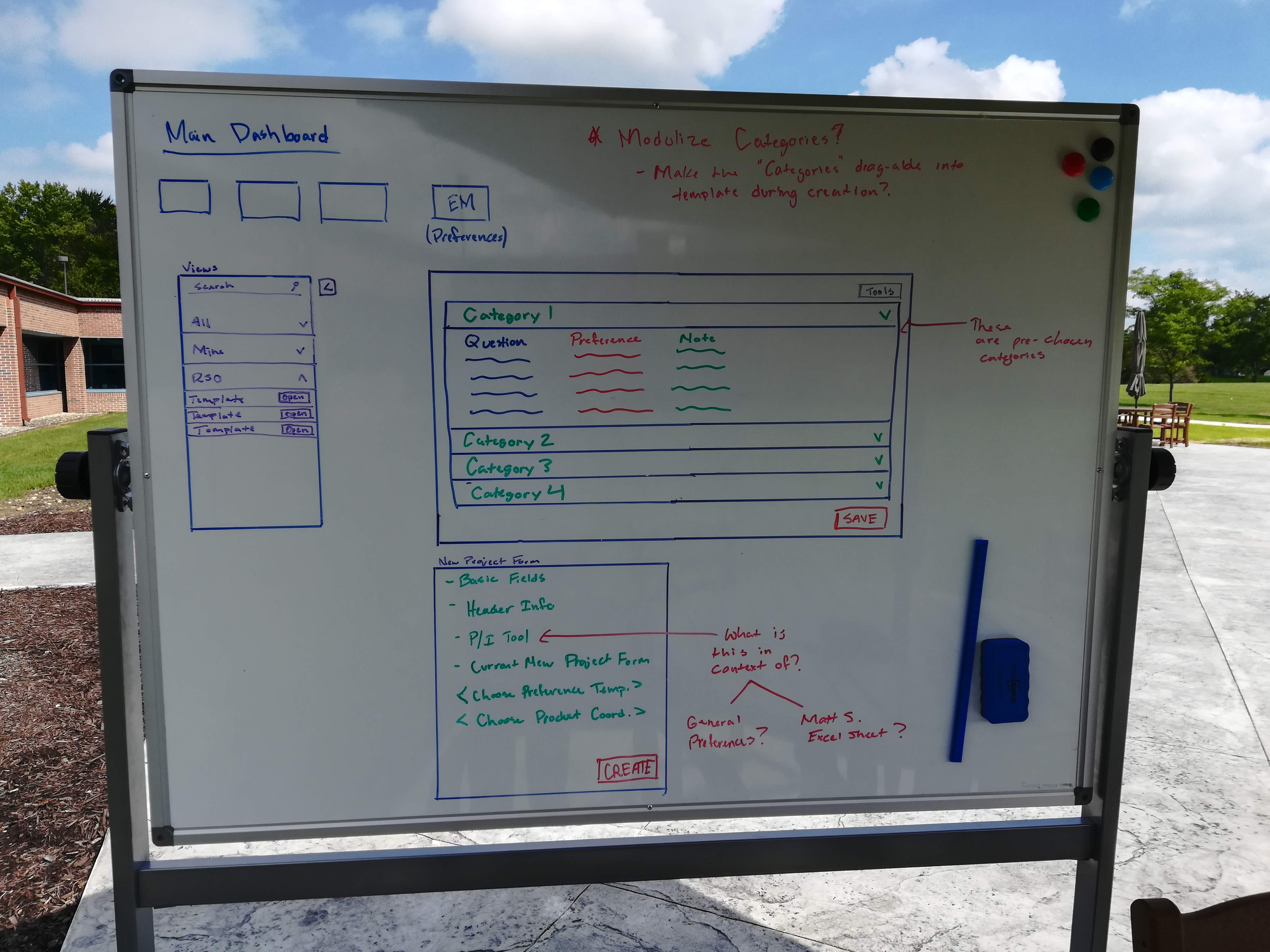
Lo-fidelity mockup of hardware and plan preferences.
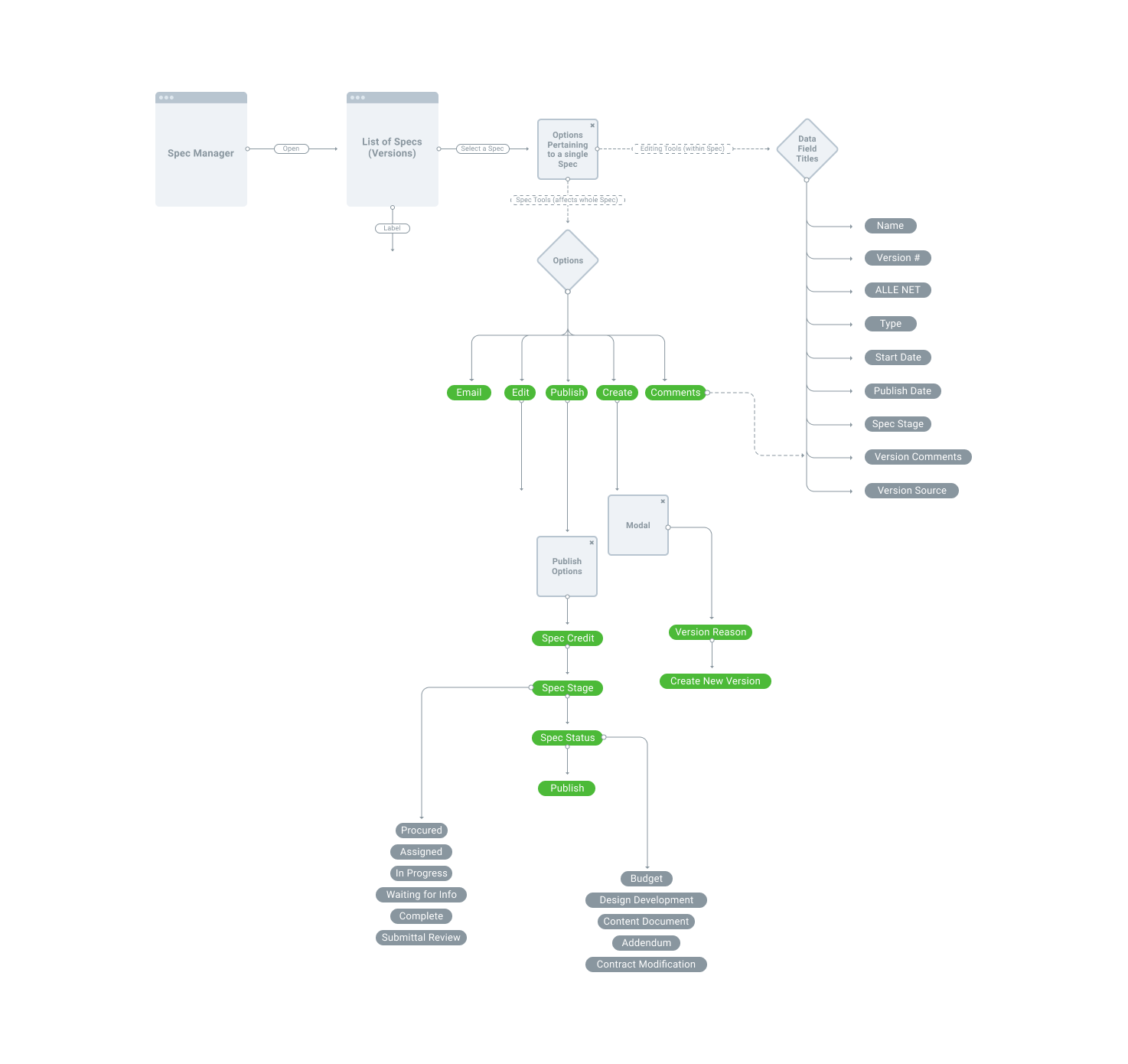
Task flow of managing a specification in Overtur.
04/Prototype and Test
We produced a range of prototypes—from low-fidelity flows to high-fidelity interactive screens:
Early UI concepts for desktop included importing and exporting building plan data, change-tracking visualizations, managing hardware and door specifications, early reporting formats for field documentation and a collaborative floor plan mode with a wide range of specification tools.
Prototypes were shared with users and internal experts to validate assumptions before committing to development.
Early UI concepts for desktop included importing and exporting building plan data, change-tracking visualizations, managing hardware and door specifications, early reporting formats for field documentation and a collaborative floor plan mode with a wide range of specification tools.
Prototypes were shared with users and internal experts to validate assumptions before committing to development.
Validation with real users
We conducted multiple rounds of usability testing and pilot projects with hardware consultants and architects.
Pilot projects revealed additional needs, including offline access, industry-standard terminology, and faster batch updates. This feedback directly guided improvements on navigation, data structure, terminology, and overall workflow.
(Examples of prototype screens below)
View Figma PrototypesPilot projects revealed additional needs, including offline access, industry-standard terminology, and faster batch updates. This feedback directly guided improvements on navigation, data structure, terminology, and overall workflow.
(Examples of prototype screens below)
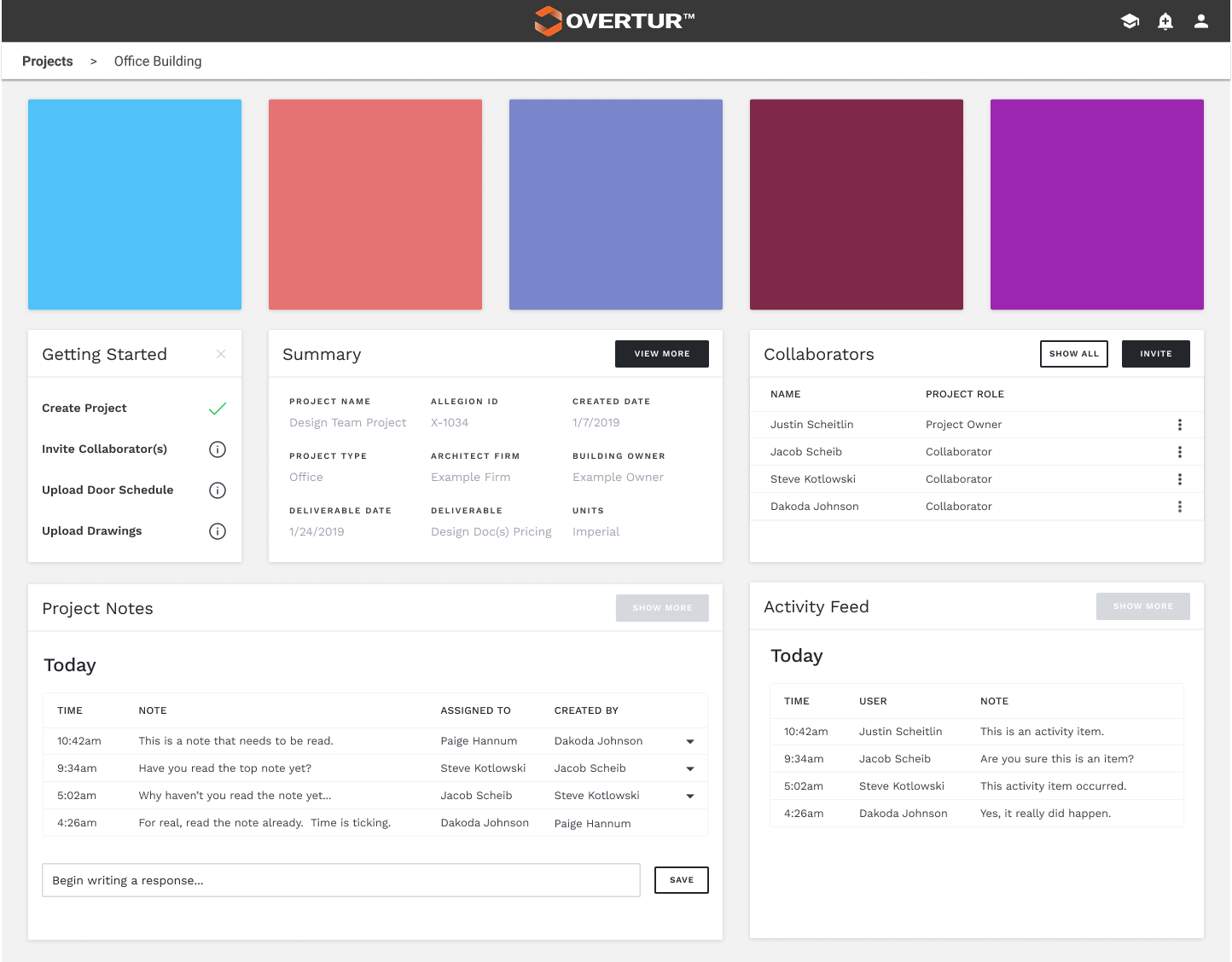
Project Dashboard for Overtur.
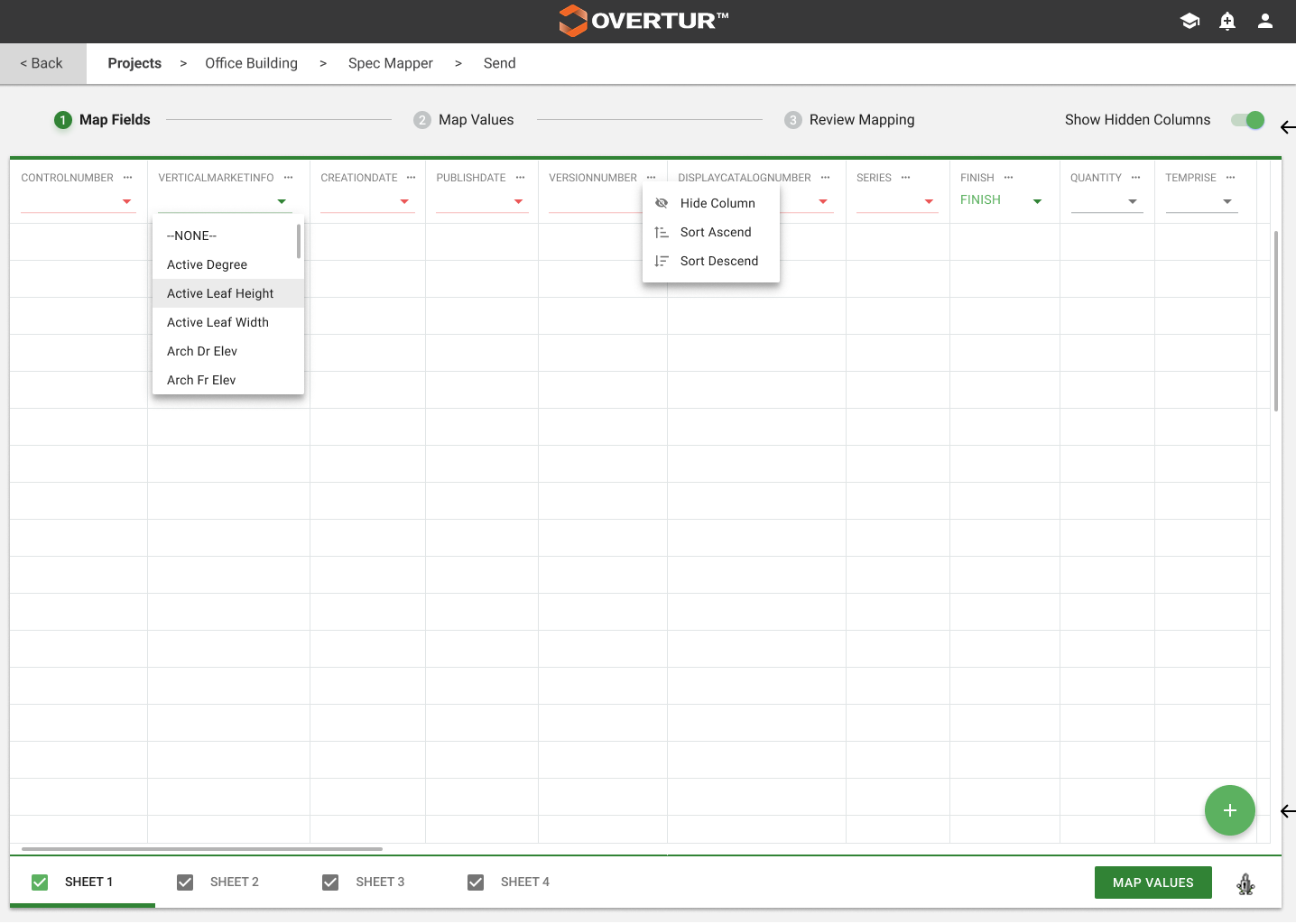
Map Data prototype for Overtur. (data redacted)
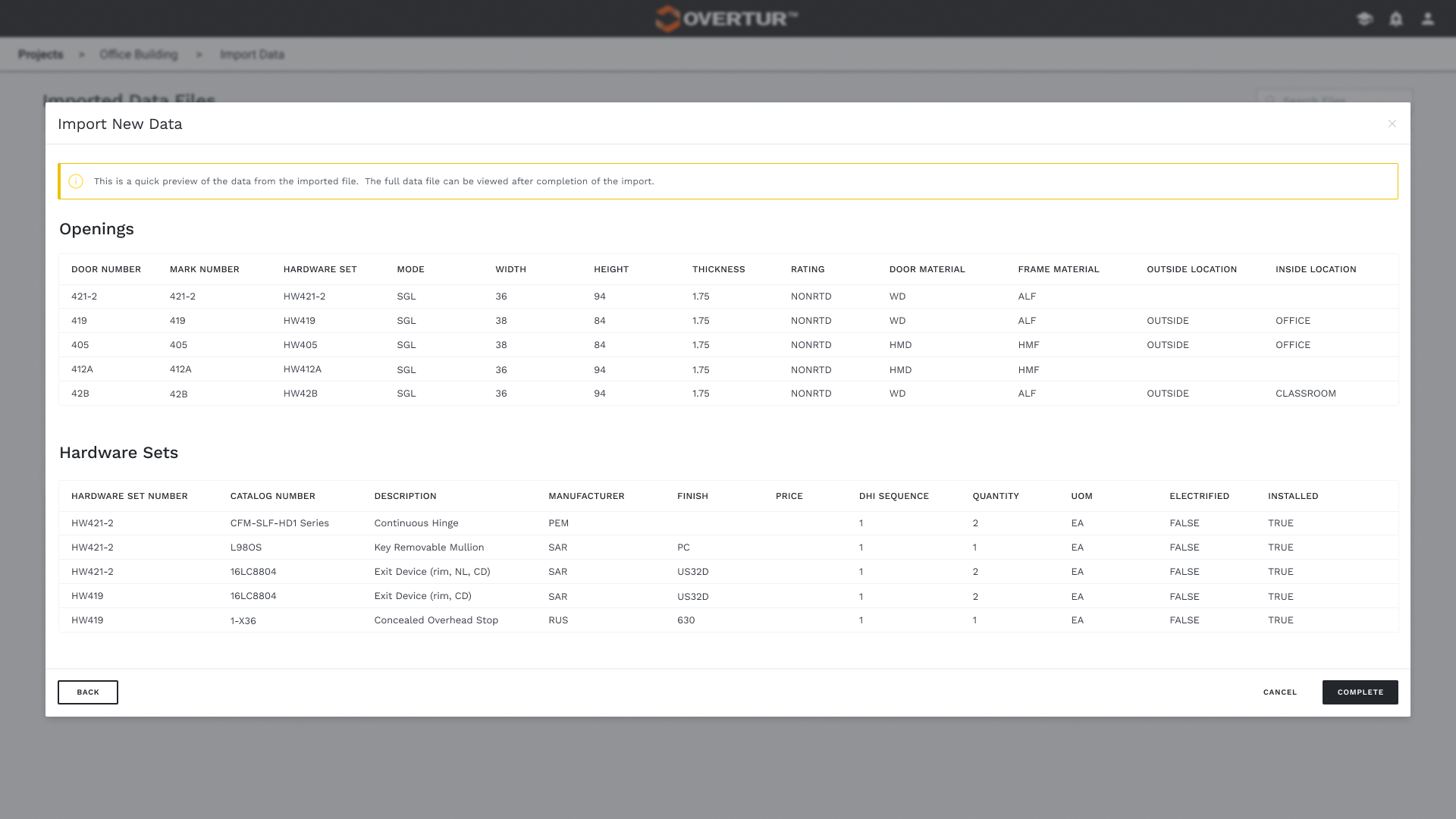
Import and Export Data prototype for Overtur
.png)
New Project Creation prototype for Overtur.
05/Launching the Product
Overtur launched to the public as a cloud-first collaboration platform in late 2017 to much enthusiasm.
Evolution through continuous user feedback
Post-launch, the team sustained continuous improvement by collecting user feedback, which allowed me to continue to refine the UI over the years and provide updates to each process.
Metrics and Outcome
At the time of launch and for several years after, Overtur did not utilize metrics. This was a painpoint for the team as the application continued to grow. What was measured from launch was the number of users signed up and revenue collected over the year - which was 200 + users and $1 million in revenue. Metrics began to be introduced after several redesigns.
The launch of this app served as the blueprint for the entire Overtur ecosystem. By collaborating with leadership and product owners, we mapped out a high-level vision that evolved into a full suite of tools under the Overtur umbrella—many of which I personally designed or consulted on.
The launch of this app served as the blueprint for the entire Overtur ecosystem. By collaborating with leadership and product owners, we mapped out a high-level vision that evolved into a full suite of tools under the Overtur umbrella—many of which I personally designed or consulted on.
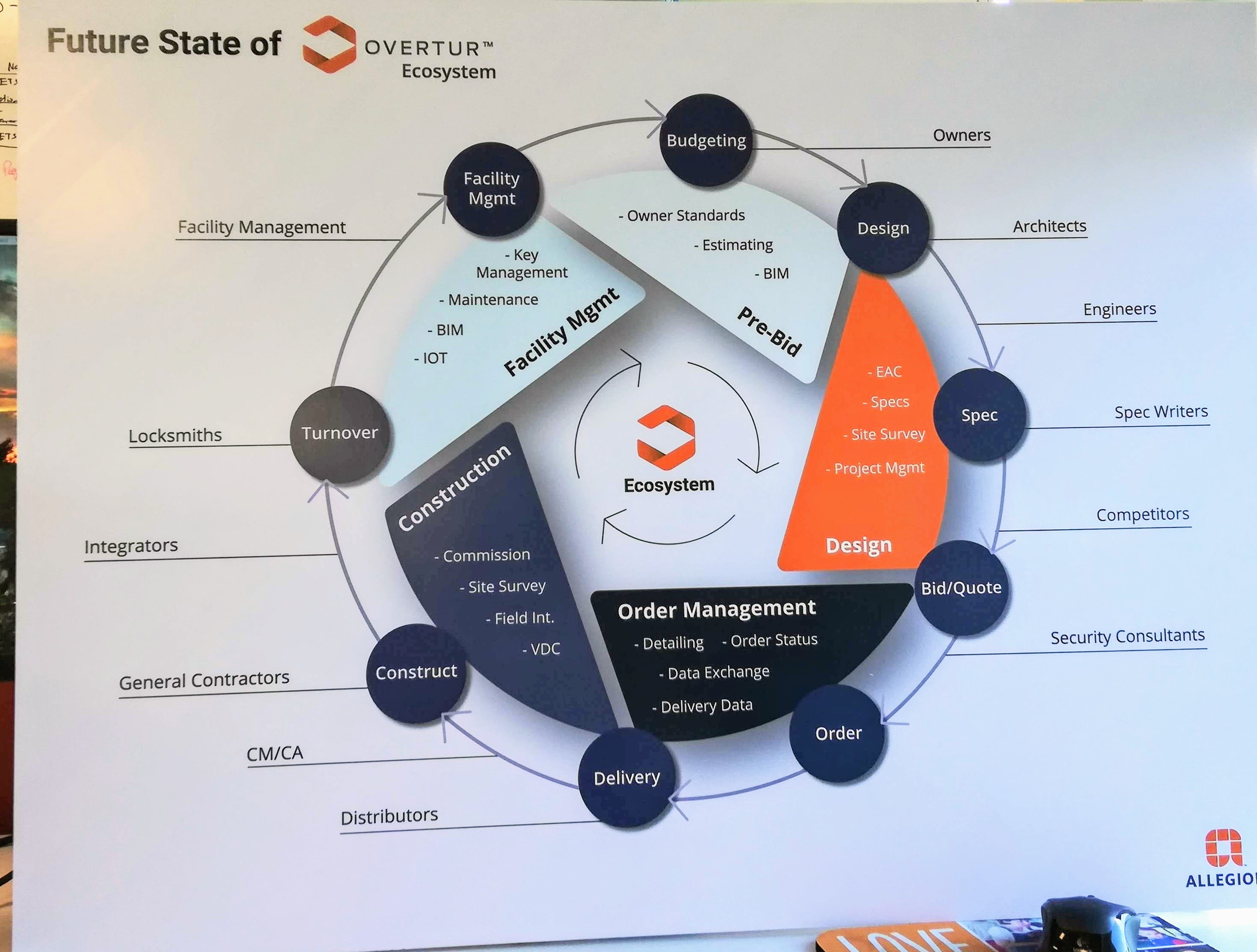
Ecosystem Diagram of the future state of the Overtur suite of tools.
Final Thoughts
When I first joined the team and project, I had limited knowledge of the door and hardware industry. Coming from a marketing background that emphasized “pixel-perfect” design and messaging, collaborating closely with developers and business leaders was a new but exciting experience for me.
Through ongoing communication among the design team, business leads, and user groups, we were able to conceptualize and iterate on application designs that were truly user-driven. Watching the application evolve through multiple design and development iterations before its initial launch was both challenging and deeply rewarding.
This project helped me discover something important about myself: I have a genuine passion for solving problems that create meaningful improvements for users. And, of course, I can now confidently say I know what a continuous hinge is!
Return HomeNext ProjectThrough ongoing communication among the design team, business leads, and user groups, we were able to conceptualize and iterate on application designs that were truly user-driven. Watching the application evolve through multiple design and development iterations before its initial launch was both challenging and deeply rewarding.
This project helped me discover something important about myself: I have a genuine passion for solving problems that create meaningful improvements for users. And, of course, I can now confidently say I know what a continuous hinge is!